If you’re thinking about CoolSculpting, you’ve probably wondered the obvious question: Does CoolSculpting hurt?
Usually, the answer is: it can be uncomfortable at times, but most people tolerate it really well.
CoolSculpting isn’t completely sensation-free. You’ll feel the cold. Depending on the applicator, you may feel suction or pressure. And there are a couple of moments during the appointment that can feel pretty intense.
But those sensations don’t last throughout your entire treatment.
In fact, once the treatment area becomes numb, most of our patients settle in, get on their phones, watch something, work, take a nap, or just relax.
So rather than telling you CoolSculpting “doesn’t hurt,” let’s talk about what it actually feels like, from the moment the applicator goes on through the days after treatment.
So, What Does CoolSculpting Feel Like?
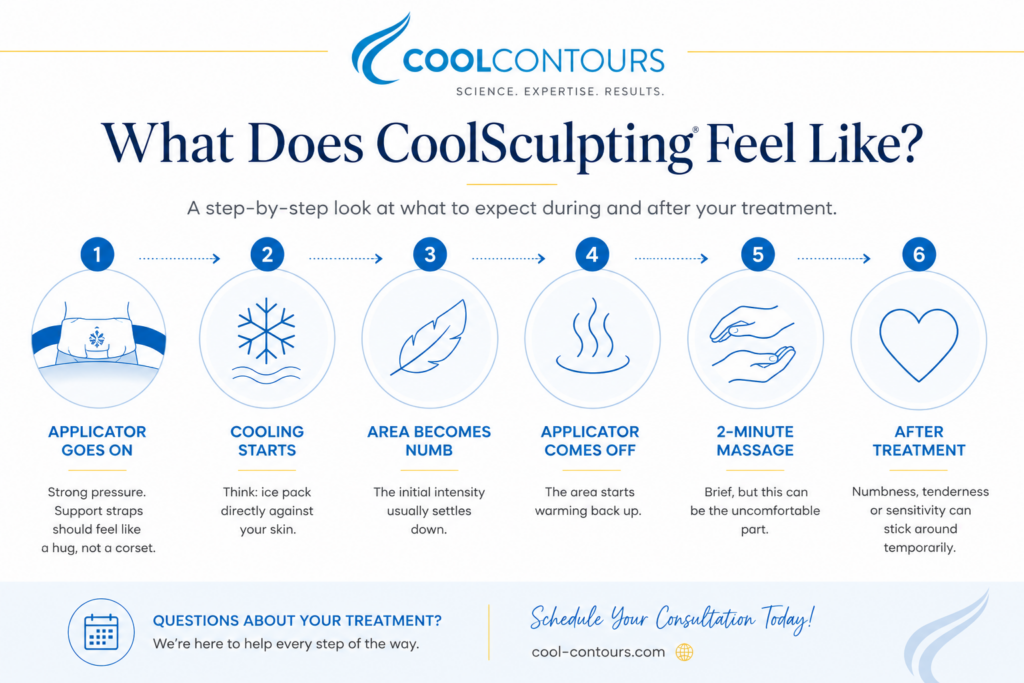
There are really four parts of the treatment experience:
- The applicator goes on.
- The cooling starts.
- The area becomes numb.
- The applicator comes off and we massage the area.
Each feels a little different.
When the Applicator Goes On
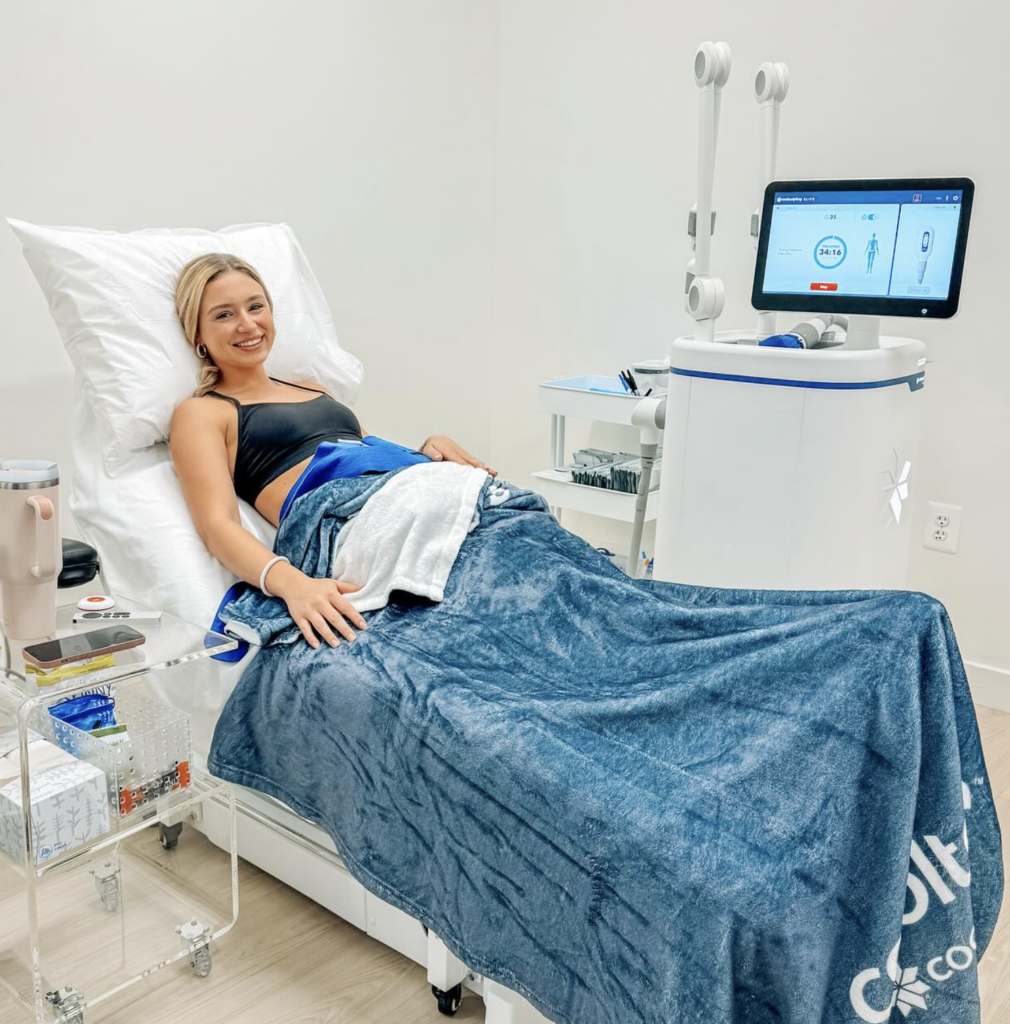
Some CoolSculpting applicators use suction to pull the treatment area into the applicator.
If you’ve ever put the vacuum hose at a car wash against your skin, that’s actually a pretty good comparison.
It feels like strong suction and pressure.
Other applicators don’t use suction, so what you feel depends on the area we’re treating and the applicator we choose for your treatment plan. We may also use straps and Velcro to keep the applicators securely in place. We train our team that those straps should feel like a hug, not a corset. They should feel secure without being overly tight.
Then Comes the Cold
This is usually the part people notice right away.
Think about putting an ice pack directly against your bare skin.
You may initially feel intense cold along with tingling, stinging, aching, cramping, pulling, or pressure. CoolSculpting lists these among the sensations patients may experience when treatment begins.
Then the area starts to go numb.
And that changes the experience quite a bit.
Once You’re Numb, It Gets Much Easier
As the area becomes numb, those initial sensations usually settle down.
This is when most patients get comfortable.
You can scroll through your phone, answer emails, watch a show, read, or just relax.
You’re still attached to a CoolSculpting machine, obviously, but you shouldn’t spend the entire treatment feeling that same intense cold you noticed when it started.
What Does It Feel Like When the Applicator Comes Off?
This is one of those things that’s hard to describe until you’ve felt it.
Imagine your feet are freezing cold and you put them into a warm bath. That warming sensation can feel pretty intense.
Something similar can happen when we remove a CoolSculpting applicator. The tissue has been cold and numb, and now it starts warming again.
Then comes the massage.
Does the Massage After CoolSculpting Hurt?
For some patients, this is the least-favorite part of the appointment.
The best comparison we’ve found is having someone rub directly over a bruise. Not great.
Thankfully, it lasts about two minutes.
The massage happens immediately after we remove the applicator. You do not need to spend the next several days massaging the area yourself to make your treatment work.
The Two-Minute Massage
What does it feel like?
Like someone rubbing directly over a bruise.
Is it comfortable?
Not always.
How long does it last?
About two minutes.
Do I have to keep massaging at home?
No.
What Will I Feel Right After CoolSculpting?
Your treatment area may feel a little weird afterward.
That’s probably the most relatable way to put it.
You might notice:
- Numbness
- Redness
- Tenderness
- Aching
- Tingling
- Firmness
- Swelling
- Skin sensitivity
While you may feel several of these, you may barely notice anything.
Both experiences happen.
Most patients can get back to their normal routine as soon as they feel comfortable. You don’t have to schedule days off just because you’re having CoolSculpting.
If you want the full week-by-week picture, read our CoolSculpting Recovery Timeline.
Does CoolSculpting Hurt the Next Day?
It can, but everyone’s experience is different. Some patients wake up the next morning and mostly notice that the area is numb.
Others feel sore, tender, sensitive, or a little bruised.
You may also notice that clothing pressing against the area feels different than usual. That doesn’t necessarily mean anything is wrong.
CoolSculpting recognizes tenderness, aching, cramping, skin sensitivity, tingling, numbness, swelling, and other temporary effects during the first couple of weeks after treatment.
If you’re trying to figure out whether a specific symptom is expected, we’ve broken those down individually in CoolSculpting Side Effects: What’s Normal and When Should You Be Concerned?.
How Long Does CoolSculpting Pain Last?
There’s no exact timeline that applies to everyone.
Most of the usual post-treatment discomfort improves as your treatment area recovers.
You might feel tender or sore for a few days. Numbness and changes in sensation can stick around longer.
The important thing is how you’re feeling over time.
If things are gradually settling down, that’s very different from pain that suddenly appears, becomes severe, or continues getting worse.
Can Pain Start Several Days After CoolSculpting?
Yes. This is something we want patients to know about because not every post-treatment sensation starts immediately.
CoolSculpting identifies late-onset pain as a rare adverse event. It typically begins several days after treatment and can take several weeks to resolve.
In other words, you could feel relatively normal after your appointment and notice more significant discomfort several days later.
If that happens, call the provider who treated you.
Don’t spend hours trying to diagnose yourself online.
Your treating provider knows where you were treated, which applicators were used, your medical history, and exactly what was done during your appointment.
Already Had CoolSculpting and You’re in Pain?
Treated at Cool Contours?
Call us. We want to know what’s going on and help you determine the next step.
Treated somewhere else?
Please contact the practice that performed your treatment. They have your treatment records and need to evaluate and manage any post-treatment concerns.
Cool Contours cannot manage pain or complications from treatments performed at another facility.
When Should I Call My Provider About Pain?
You don’t need to wait until something feels like an emergency to ask a question.
Contact your treating provider if:
- Your pain is severe
- Pain keeps getting worse instead of better
- Pain significantly interferes with your normal activities
- You notice an unexpected change in your skin
- Something feels very different from what your provider told you to expect
- You’re worried about what you’re feeling
That last one matters.
If something doesn’t feel right to you, call.
If Cool Contours treated you, we’d rather answer the question than have you sitting at home wondering whether something is normal.
For a broader look at risks, contraindications, side effects, and candidate selection, read Is CoolSculpting Safe?.
You can also review the FDA’s information about non-invasive body contouring technologies.
What Can Help With Discomfort After CoolSculpting?
You generally don’t need an elaborate recovery routine.
Try Heat or Ice
Heat or ice may help if you’re feeling sore.
There’s one important catch: your skin may still be numb.
If you can’t fully feel the temperature against your skin, it’s easier to accidentally leave something too hot or too cold in place for too long.
Use a towel or another barrier between your skin and the heat or ice, and be mindful of how long you’re using it.
Try Compression
Compression can feel good if you’re swollen or tender.
It isn’t required for your CoolSculpting results. Think of it as something you can use for comfort if it helps.
Keep Moving
You don’t need to lie around after CoolSculpting.
Get back to your normal routine as you feel comfortable. If something hurts, don’t force it.
Stay Hydrated
Keep drinking plenty of water and maintain your normal hydration.
Have a Medication Question?
Ask your treating provider.
We’re intentionally not giving blanket medication recommendations here because your medical history, current medications, allergies, and other factors matter.
Does CoolSculpting Feel Different Depending on the Area?
It can.
Different applicators create different sensations, and treating your abdomen doesn’t necessarily feel exactly like treating beneath your chin.
Vacuum applicators create suction. Other applicators primarily create pressure.
Treatment beneath the chin or jawline can also cause some different temporary sensations. For example, CoolSculpting’s safety information notes that some patients may experience temporary throat discomfort, soreness, or a feeling of fullness after treatment in this area.
That’s one reason we don’t love giving patients a generic answer about what CoolSculpting feels like.
Where you’re treating matters. Your anatomy matters. And your individual sensitivity matters.
Your Provider Matters, Too
Part of making CoolSculpting a good experience happens before we ever turn the machine on.
Your provider should look at your anatomy, talk through your health history, understand what you want to change, and determine whether CoolSculpting actually makes sense for you.
That includes discussing things like existing nerve pain, changes in skin sensation, chronic pain, previous surgeries, scars, and other factors that could affect treatment.
It also means choosing the right applicators and positioning them correctly.
At Cool Contours, body contouring isn’t something we squeeze in between unrelated services. It’s what our team specializes in.
If you want to dig deeper into candidacy and safety before deciding, start with Is CoolSculpting Safe? Risks, Side Effects, and Who Should Avoid It.
Is CoolSculpting Worth the Discomfort?
That’s really the question, isn’t it?
You’re probably not researching whether CoolSculpting hurts because you’re curious about cold temperatures. You’re trying to decide whether the treatment experience is worth it for the result you want.
For the right patient, CoolSculpting offers a way to reduce stubborn, pinchable fat without surgery or surgical downtime.
But temporary discomfort is part of the conversation.
We think you should know that before you book, not discover it afterward.
Take a look at our CoolSculpting before-and-after results to see what treatment can realistically accomplish.
You can also learn more about CoolSculpting at Cool Contours, including treatment areas, candidacy, and how we approach treatment planning.
Frequently Asked Questions About CoolSculpting Pain
You will feel CoolSculpting, especially when cooling first begins and immediately after the applicator comes off. Most patients tolerate treatment well, and the initial intensity usually decreases as the area becomes numb.
The initial cold can feel like holding an ice pack directly against bare skin. Vacuum applicators can feel similar to strong vacuum suction against your skin. You may also notice pulling, pressure, tingling, stinging, or aching before the area becomes numb.
It depends on the person. Some patients don’t love the first few minutes of cooling. Others say the brief massage immediately after the applicator comes off is the most uncomfortable part.
It can. We often compare it to someone rubbing directly over a bruise. The good news is that it lasts about two minutes.
You may feel tender, sore, sensitive, numb, or completely fine. Recovery varies from patient to patient.
Yes. Some discomfort can continue after treatment, and rare late-onset pain can begin several days afterward. Contact the provider who performed your treatment if you develop significant or concerning pain.
Most patients can return to exercise and normal activities as soon as they feel comfortable. There is no restrictions on diet or exercise for most patients, although advice can deviate based on your personal medical history and the area being treated.
Heat or ice may help with soreness. Because the treated skin can remain numb, use a barrier such as a towel and avoid prolonged direct exposure to very hot or cold temperatures.
Contact your treating provider if pain is severe, getting worse, interfering significantly with normal activities, occurs with an unexpected skin change, or simply concerns you.
Nervous About CoolSculpting? That’s a Fair Question.
You don’t need to pretend you’re not worried about discomfort.
That’s part of what a consultation is for.
At Cool Contours, we’ll talk you through what treatment actually feels like, evaluate the areas you’re considering, explain what you can realistically expect afterward, and help you decide whether CoolSculpting makes sense for you.
You can also review the official CoolSculpting treatment information before your consultation.
Already Had Treatment?
If Cool Contours treated you and you’re concerned about pain or another symptom, contact our team directly.
If another facility performed your treatment, contact that treati