


One of the most common questions patients ask before treatment is, “Is CoolSculpting safe?”
For most appropriately selected patients, CoolSculpting has a well-established safety profile. It is an FDA-cleared, non-surgical body contouring treatment that uses controlled cooling to reduce visible pockets of pinchable fat without incisions or anesthesia. More than 17 million treatments have been performed worldwide, and the technology has been studied in more than 100 scientific publications.
However, CoolSculpting is not right for everyone.
It is a prescriptive medical device with specific contraindications, known temporary side effects, and rare potential complications. The device’s safety profile matters, but so do appropriate patient selection, careful treatment planning, and the experience of the provider performing the procedure.
At Cool Contours, our providers evaluate your medical history, anatomy, treatment goals, skin quality, fat distribution, and other factors before recommending treatment. In some cases, the safest recommendation is not to proceed with CoolSculpting at all.
In this guide, you’ll learn what makes CoolSculpting safe, who should avoid treatment, what side effects to expect, which rare risks every patient should understand, and why choosing an experienced provider matters.
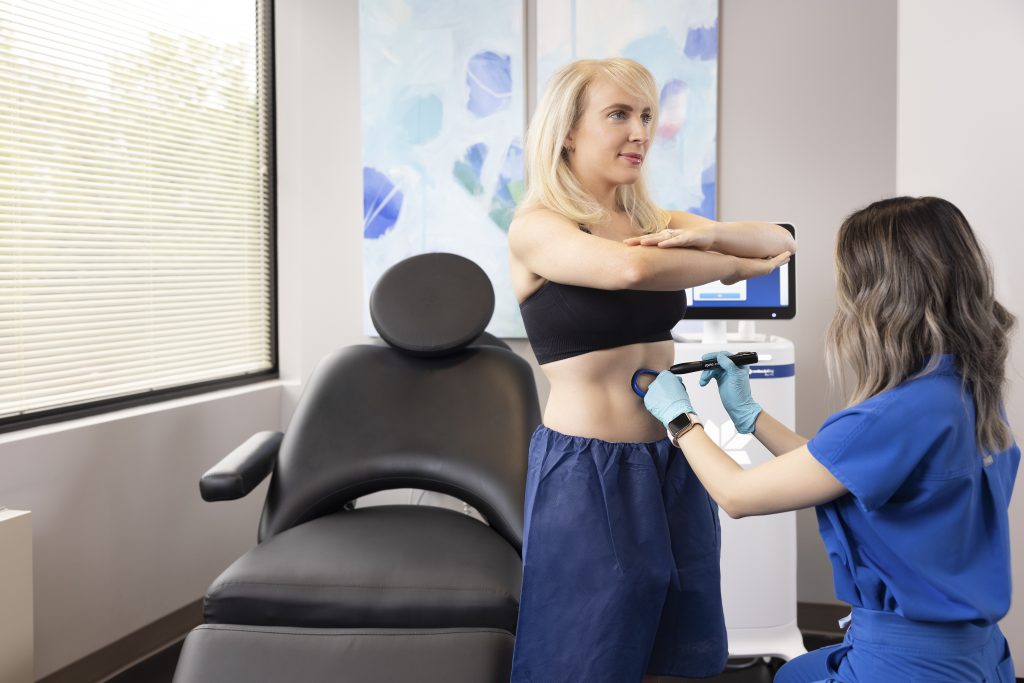
Quick Answer: Is CoolSculpting Safe?
Yes. CoolSculpting has a well-established safety profile for appropriate candidates when a qualified provider performs the treatment.
The CoolSculpting system was initially FDA-cleared in 2009 for non-invasive fat reduction of the flanks. Its indications were later expanded to include visible fat bulges in nine treatment areas:
- Under the chin
- Under the jawline
- Upper arms
- Bra fat
- Back fat
- Abdomen
- Flanks
- Thighs
- Beneath the buttocks, commonly called the banana roll
The FDA later expanded its clearance to include improving the appearance of lax tissue beneath the chin.
CoolSculpting does not involve:
- Incisions
- General anesthesia
- Sutures
- Surgical fat removal
- A traditional surgical recovery period
Most reported side effects are temporary and resolve within days or weeks. These may include redness, swelling, bruising, numbness, tingling, tenderness, aching, firmness, and changes in sensation. More serious adverse events are possible but uncommon.
The most important limitation is that CoolSculpting is not appropriate for every person or every body contouring concern.
Why CoolSculpting Is Considered a Well-Studied Treatment
CoolSculpting uses a process called cryolipolysis, or controlled cooling.
Fat cells are more sensitive to cold than many of the surrounding tissues. During treatment, an applicator draws pinchable tissue into the treatment cup and delivers controlled cooling. Controlled cooling damages the targeted fat cells, allowing your body to gradually eliminate them over the following weeks and months.
CoolSculpting reduces fat without freezing the skin. CoolSculpting devices also include temperature-monitoring safety features that can detect unexpected temperature changes and stop the treatment when necessary.
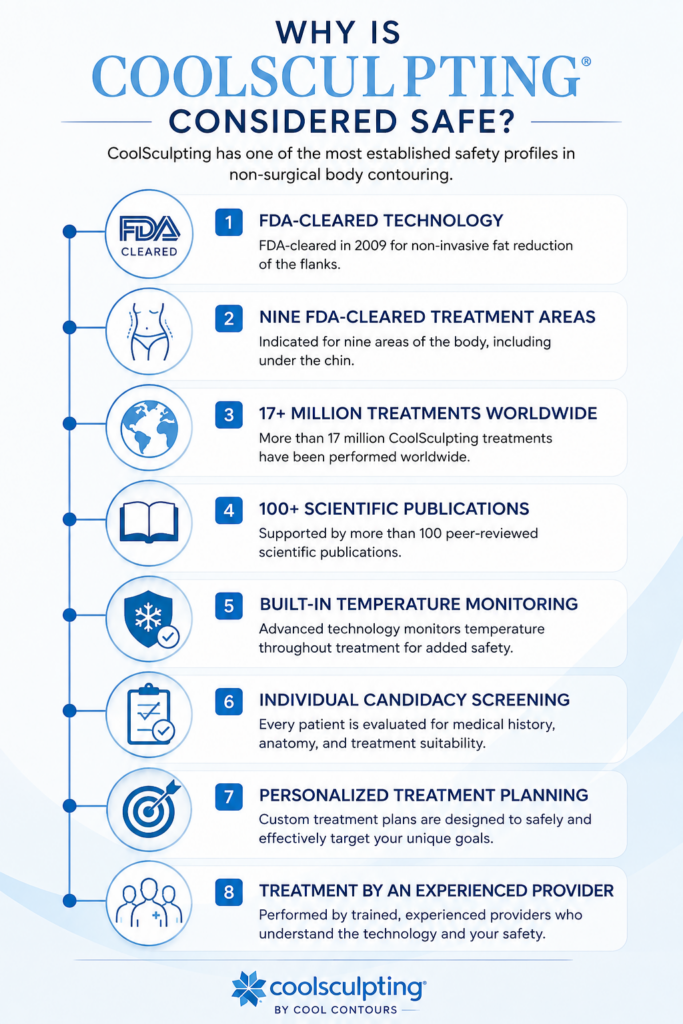
The following factors contribute to CoolSculpting’s long-established safety profile:
- FDA clearance for specific treatment areas
- More than 17 million treatments performed worldwide
- More than 100 scientific publications
- Built-in temperature monitoring
- Standardized applicators and treatment protocols
- A long history of clinical and commercial use
That does not mean the procedure is risk-free. It means the expected effects and potential complications have been studied and documented more extensively than many newer non-surgical body contouring technologies.
CoolSculpting Is a Prescriptive Medical Device
Some providers position CoolSculpting as a simple cosmetic treatment, but it requires medical judgment, appropriate patient selection, and proper treatment planning.
CoolSculpting is a prescriptive medical device. A qualified provider should recommend treatment only after completing a thorough evaluation and should perform the procedure under the oversight required by applicable state regulations.
A qualified provider should understand:
- The device’s contraindications
- Which medical conditions require additional review
- How to assess the type and location of fat
- How to identify a hernia or other anatomical concern
- Which applicator is appropriate
- How to position the applicator safely
- When a patient’s concern is not caused by subcutaneous fat
- When surgery or another treatment may be more appropriate
The device cannot make those decisions on its own.
Technology Does Not Replace Clinical Judgment
Technology alone does not determine patient safety.
Patient selection and treatment planning are just as important as the safety engineering built into the CoolSculpting system. An experienced provider should know not only how to perform the treatment, but also when not to perform it.
For example, CoolSculpting reduces localized, pinchable subcutaneous fat. It does not treat:
- Visceral fat located around the internal organs
- Significant loose skin
- Diastasis recti
- A hernia
- General obesity
- Cellulite caused by fibrous bands
- Muscle laxity
- Every cause of abdominal fullness
Even when a provider performs CoolSculpting correctly, treating the wrong concern often leads to disappointing results.
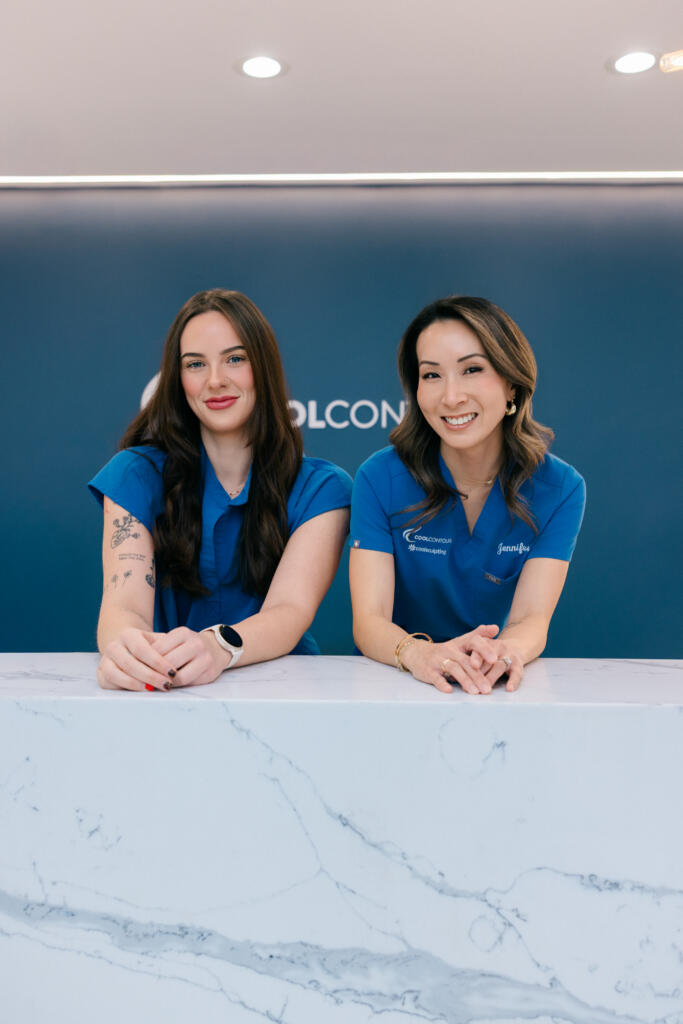
At Cool Contours, body contouring is the practice’s primary focus. Jennifer Kim is an Allergan Medical Institute Faculty Member and national trainer for CoolSculpting and CoolTone. Both Jennifer Kim and Paige Cox have completed the CoolSculpting University Masters Program, the highest level of manufacturer-led CoolSculpting education available.
That experience allows the team to evaluate candidacy, create personalized treatment plans, and recommend the treatment that best aligns with each patient’s anatomy and goals, even when that isn’t CoolSculpting.
See Our CoolSculpting Results.
Read more on the blog: Who is a Good Candidate for CoolSculpting.
Who Should Not Receive CoolSculpting?
Certain rare cold-related medical conditions make someone ineligible for CoolSculpting treatment.
You should not receive treatment if you have:
Cryoglobulinemia
Cryoglobulinemia is a condition involving abnormal proteins in the blood that can thicken or precipitate in cold temperatures.
Cold agglutinin disease
Cold agglutinin disease is an autoimmune condition in which cold temperatures can cause red blood cells to clump together.
Paroxysmal cold hemoglobinuria
Paroxysmal cold hemoglobinuria is a rare autoimmune blood disorder in which cold exposure can trigger the destruction of red blood cells.
These are formal contraindications listed in the CoolSculpting safety information.
Before undergoing treatment, every patient should review the manufacturer’s complete CoolSculpting Important Safety Information, including contraindications, warnings, precautions, and potential side effects.
Conditions That Require Additional Evaluation
Some conditions are not absolute contraindications, but patients should discuss them with their provider before treatment.
These may include:
- A known or suspected hernia near the treatment area
- Open wounds, active infection, or significant skin irritation
- Impaired sensation in the treatment area
- Neuropathy
- Bleeding disorders
- Use of medications that increase bruising or bleeding
- Recent surgery
- Scar tissue
- Significant skin laxity
- Chronic pain or nerve conditions
- A history of cold sensitivity
- Concerns that may involve visceral fat rather than pinchable fat
This is not a complete list. A medical provider should review your medical history and examine the proposed treatment area before clearing you for treatment.
Is CoolSculpting Safe During Pregnancy or Breastfeeding?
CoolSculpting has not been studied in pregnant or breastfeeding patients.
Cool Contours does not treat patients during pregnancy. The practice also approaches breastfeeding as a clinical consideration requiring discussion and generally recommends waiting until the body and hormones have reached a more stable baseline.
For patients who hope to become pregnant later, there is no evidence that prior CoolSculpting treatment causes infertility. The treatment targets localized subcutaneous fat and does not affect the reproductive organs.
However, pregnancy can change body shape, fat distribution, muscle tone, and skin laxity. Patients who are actively trying to conceive may prefer to wait so their treatment plan can be based on their post-pregnancy anatomy.
Is CoolSculpting Safe for Darker Skin Tones?
CoolSculpting does not target pigment or melanin.
Unlike some light-based or laser procedures, it uses controlled cooling beneath the skin to target fat cells. This means skin tone alone does not determine whether someone is a candidate.
However, all patients still require an evaluation for underlying conditions, skin integrity, sensation, and treatment-area anatomy. A provider should also discuss the possibility of temporary redness, bruising, sensory changes, and rare skin complications.
Is It Safe to Have Multiple CoolSculpting Treatments?
Many patients receive more than one CoolSculpting session. Almost all patients receive at least two treatment sessions, often spaced 4-8 weeks apart, depending on their goals and treatment plan.
Multiple treatments can be appropriate when:
- Additional fat reduction remains a goal.
- You plan to treat more than one body area.
- Your provider recommends a staged treatment plan for balanced results.
- Your provider determines another treatment is appropriate.
The number and timing of treatments should be individualized. More treatment is not automatically better, and repeating treatment without reassessing the area can increase the risk of poor contour, excessive reduction, or dissatisfaction.
What Are the Most Common CoolSculpting Side Effects?
Most patients experience temporary side effects that remain localized to the treatment area.
Common effects may include:
- Redness
- Swelling
- Bruising
- Blanching
- Firmness
- Tenderness
- Aching
- Cramping
- Stinging
- Tingling
- Itching
- Numbness
- Increased skin sensitivity
Sensory changes can persist for several weeks in some patients. Treatment beneath the chin or jawline may also cause temporary throat discomfort or a sensation of fullness.
These effects do not necessarily indicate that anything has gone wrong. Suction, controlled cooling, tissue manipulation, and your body’s natural inflammatory response commonly cause these temporary effects.
Patients should still contact their provider if symptoms are severe, worsening, unusual, or concerning.
Most side effects are mild and temporary. Learn what to expect after treatment and when it’s appropriate to contact your provider in our guide, CoolSculpting Side Effects: What’s Normal and When to Contact Your Provider.
Wondering what happens after your appointment? Read our CoolSculpting Recovery Timeline to learn what to expect during the first few days and weeks after treatment.
Does CoolSculpting Hurt?
During treatment, patients commonly describe:
- Strong pulling or suction
- Pressure
- Intense cold during the first several minutes
- Gradual numbness in the treatment area
After the applicator is removed, the provider performs a brief massage. This can be uncomfortable because the tissue is still cold and sensation is returning.
After treatment, some patients experience tenderness, soreness, tingling, sensitivity, or delayed nerve discomfort. Experiences vary considerably by treatment area and individual sensitivity.
If your pain becomes severe, persists, or worsens over time, contact your treating provider.
Wondering what the treatment actually feels like? Learn what to expect during your appointment, how discomfort changes afterward, and what most patients describe in our guide: Does CoolSculpting Hurt? What Treatment and Recovery Really Feel Like.
What Does CoolSculpting Recovery Involve?
CoolSculpting typically requires little to no formal downtime. Many patients return to work, exercise, errands, and family responsibilities after treatment.
That does not mean every patient feels completely normal immediately.
The treatment area may feel swollen, firm, numb, tender, or sensitive for several days or weeks. Some patients temporarily adjust workouts, clothing, or sleep positions based on comfort.
Recovery depends on:
- The treatment area
- The number of applicators used
- Individual sensitivity
- Whether several areas were treated
- The patient’s medical history
- The intensity and duration of temporary side effects
What Rare CoolSculpting Risks Should Patients Understand?
CoolSculpting has an established safety profile, but serious or lasting adverse events can occur.
Published reviews have reported rare complications including:
- Severe or persistent pain
- Prolonged altered sensation
- Dysesthesia
- Hyperpigmentation
- Motor neuropathy
- Skin or soft-tissue injury
- Contour irregularity
- Paradoxical adipose hyperplasia
Most patients will not experience these complications. They should still be discussed before treatment so patients can provide informed consent.
What Is Paradoxical Adipose Hyperplasia?
One rare but important complication is Paradoxical Adipose Hyperplasia (PAH), an uncommon condition in which the treated area becomes larger instead of smaller. Learn how often it occurs, how to recognize it, and what treatment options are available in our guide to Paradoxical Adipose Hyperplasia (PAH) After CoolSculpting.
It usually develops several weeks or months after treatment and tends to form a well-defined enlargement that corresponds to the shape of the applicator. It is different from temporary post-treatment swelling and generally does not resolve on its own.
The manufacturer has reported an incidence around 0.025%, often rounded to approximately 0.03%. Independent published estimates have varied, with some studies reporting higher rates depending on the devices, applicators, patient populations, and methods studied. A large multicenter review reported rates between 0.05% and 0.39%, while a recent real-world review estimated risk per treatment cycle between approximately 0.018% and 0.048%.
The variation in published estimates is one reason transparent counseling and long-term follow-up matter.
PAH is treated surgically with liposuction, and some patients require more than one corrective procedure.
Can Provider Experience Prevent Every Complication?
No provider can eliminate every possible risk.
Some adverse events may occur even when a qualified provider performs the treatment correctly. However, an experienced provider can help reduce avoidable problems by:
- Screening for contraindications
- Recognizing anatomy that should not be treated
- Checking for hernias or irregularities
- Selecting the correct applicator
- Protecting the skin
- Ensuring proper placement and tissue contact
- Avoiding unsafe overlap or excessive treatment
- Documenting baseline anatomy
- Setting realistic expectations
- Monitoring recovery and responding to concerns
Experience also matters when a provider must say no.
A patient may be medically eligible for CoolSculpting but still be a poor aesthetic candidate because the concern is primarily loose skin, muscle separation, visceral fat, or another issue that cooling cannot correct.
Is CoolSculpting Safer Than Liposuction?
CoolSculpting and liposuction have different risk profiles. For patients considering surgical fat removal, our comparison of CoolSculpting vs. Liposuction explains the differences in recovery, candidacy, results, and long-term expectations.
CoolSculpting is non-surgical and does not require incisions, general anesthesia, or surgical recovery. Liposuction physically removes a larger volume of fat and may be the better option for patients seeking more substantial reduction, but it carries the risks associated with an invasive procedure.
The safer option is not automatically the same for every patient.
For someone who needs significant fat removal, skin excision, muscle repair, or a combined surgical procedure, choosing an experienced board-certified plastic surgeon may be more appropriate than trying to force a non-surgical treatment to accomplish a surgical goal.
For someone seeking targeted reduction of a pinchable fat pocket with little to no downtime, CoolSculpting may provide a suitable non-surgical option.
Wondering how CoolSculpting compares to Sono Bello? Read our complete comparison of CoolSculpting vs. Sono Bello to understand the differences in procedure, recovery, safety, and expected results.
How to Choose a Safe CoolSculpting Provider
Before scheduling treatment, ask:
- Who will evaluate my candidacy?
- Who will perform my treatment?
- What CoolSculpting education has that provider completed?
- How often does the practice perform CoolSculpting?
- Is body contouring a primary focus of the practice?
- Will the provider review my medical history?
- Will the treatment area be examined for a hernia or other concern?
- Can I see before-and-after photos from patients treated by this practice?
- How will my applicators and treatment pattern be selected?
- What happens if I experience an unexpected symptom?
- How are follow-up visits handled?
- When would the provider recommend that I not receive CoolSculpting?
A consultation should involve more than providing a quote.
It should include education, candidacy assessment, treatment planning, a discussion of risks and side effects, and realistic expectations about what CoolSculpting can and cannot accomplish.
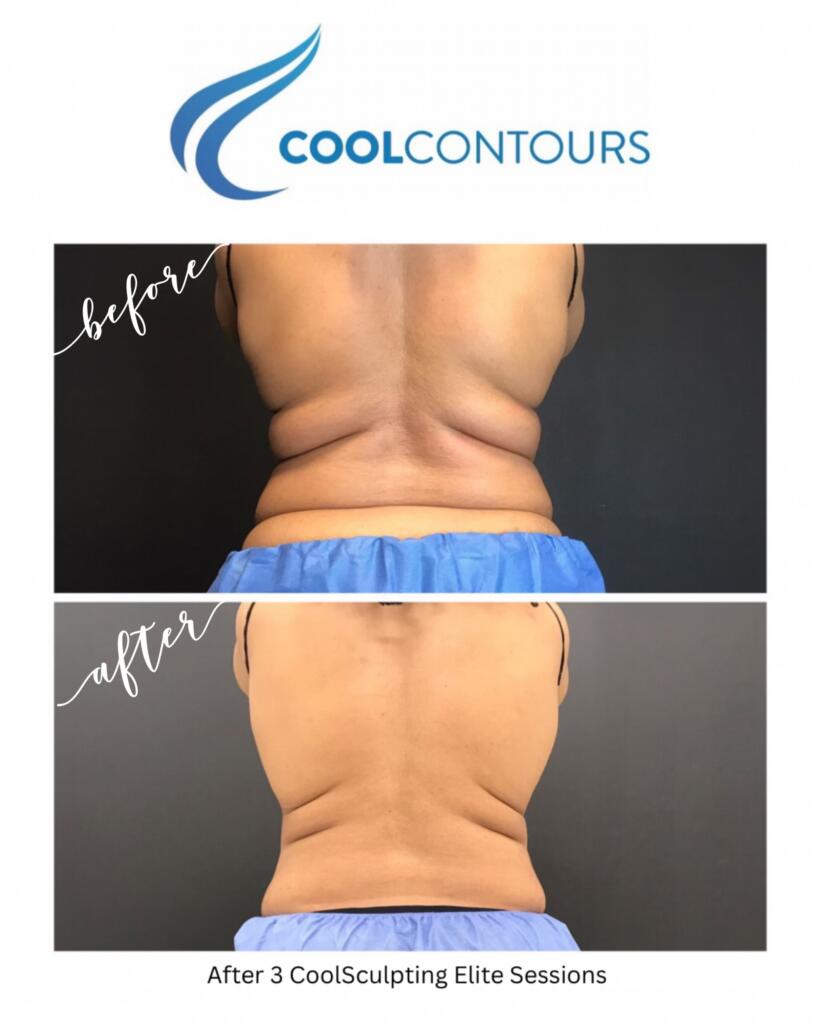
Want to see what’s possible? Browse our gallery of real CoolSculpting before-and-after photos and learn what results you can realistically expect from treatment.
Frequently Asked Questions About CoolSculpting Safety
CoolSculpting is generally considered safe for appropriately selected patients when performed by a qualified provider. Most side effects are temporary, but rare complications can occur.
The correct term is FDA-cleared, not FDA-approved. The FDA reviews medical devices through specific regulatory pathways and clears them for defined uses and treatment areas.
CoolSculpting has a well-established safety profile, but it is not risk-free. Temporary side effects are common, and rare complications such as PAH have been reported.
People with cryoglobulinemia, cold agglutinin disease, or paroxysmal cold hemoglobinuria should not receive CoolSculpting. Other medical conditions, hernias, skin concerns, pregnancy, breastfeeding, and anatomical factors may also affect candidacy.
The system is designed to cool fat without freezing the skin and includes temperature-monitoring safety features. Rare skin or soft-tissue injuries have been reported, so correct applicator placement and monitoring remain important.
Temporary numbness, tingling, and altered sensation are known side effects. Rare cases of prolonged sensory changes or motor neuropathy have been reported in the medical literature.
There is no evidence that CoolSculpting causes infertility. It is a localized treatment of subcutaneous fat and is not intended to affect reproductive organs. It has not been studied in pregnant patients, and Cool Contours does not perform treatment during pregnancy.
CoolSculpting does not target pigment, so skin tone alone does not determine candidacy. Every patient still requires an evaluation of their medical history, skin, sensation, and treatment-area anatomy.
Multiple sessions may be appropriate when recommended as part of a personalized treatment plan. The area should be reassessed before repeating treatment.
Common temporary side effects include redness, swelling, bruising, firmness, aching, tenderness, tingling, itching, numbness, and skin sensitivity.
Contact your treating provider. Severe pain, worsening symptoms, skin changes, signs of infection, persistent neurological symptoms, or an enlarging firm area should be evaluated.
Safety Begins With the Right Treatment Plan
CoolSculpting has one of the most established safety and research histories among non-surgical fat-reduction treatments. The FDA has cleared CoolSculpting to treat nine body areas, providers have performed more than 17 million treatments worldwide, and researchers have published more than 100 scientific studies on the technology.
Those facts matter, but they do not replace individualized care.
The safest treatment plan begins with an honest assessment of whether CoolSculpting is appropriate for your anatomy, health history, and goals. It also requires a provider who understands the device, recognizes its limitations, and is willing to recommend another approach when CoolSculpting is not the right solution.
At Cool Contours, every consultation includes education, candidacy assessment, customized treatment planning, and a discussion of expected results, recovery, side effects, and rare risks.
Book a complimentary in-person consultation with our team in Arlington, Virginia, to learn whether CoolSculpting is appropriate for you.
