


Many people searching for body contouring are actually trying to answer a bigger question: explain fat freezing vs weight loss. Or rather…
Do I need weight loss, or do I need CoolSculpting?
The confusion is understandable. Both weight loss and CoolSculpting can change the way your body looks, but they work very differently.
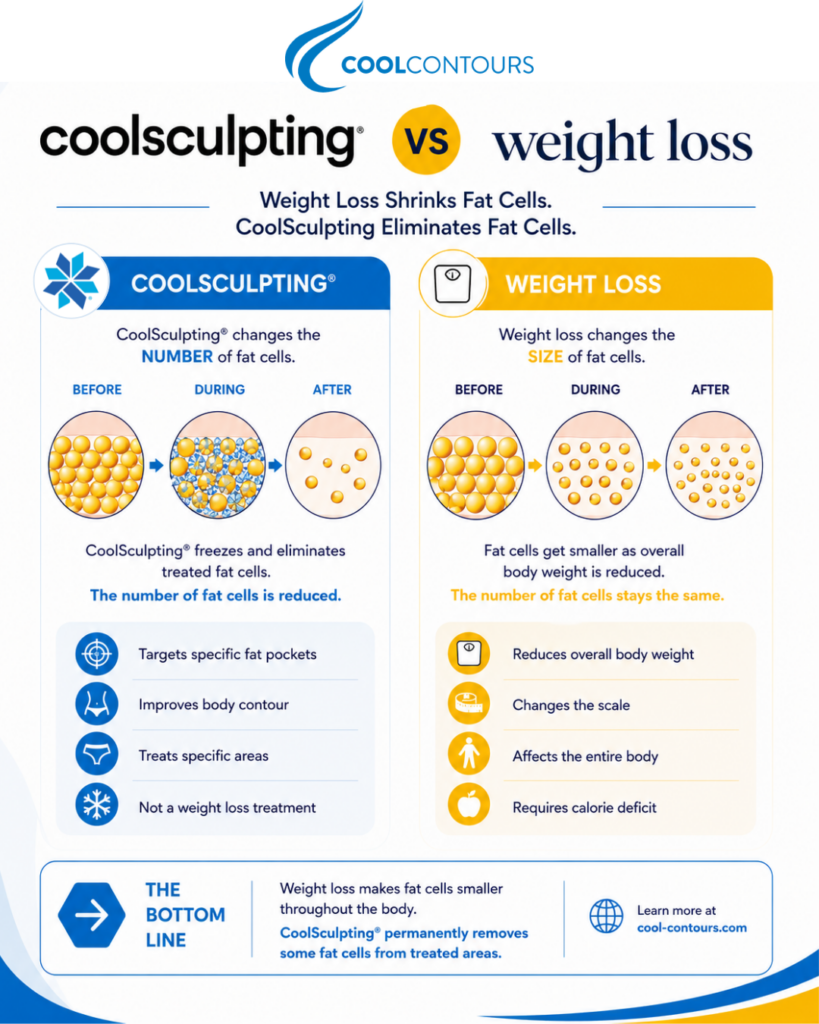
Weight loss reduces the size of fat cells throughout your body. CoolSculpting targets specific stubborn fat pockets and permanently removes some of those fat cells.
Understanding the difference in fat freezing vs weight loss can help you choose the right solution for your goals.
Does CoolSculpting Help You Lose Weight?
No.
CoolSculpting is not a weight loss treatment. It is a body contouring treatment.
When you lose weight through diet, exercise, or medication, fat cells shrink throughout the body. However, the number of fat cells generally remains the same.
CoolSculpting works differently. It uses controlled cooling technology to freeze and eliminate targeted fat cells in specific treatment areas. Once those treated fat cells are removed, they are processed and eliminated by the body.
This is why CoolSculpting is designed to improve shape and contour rather than reduce the number on the scale.
Weight Loss Changes Fat Cell Size
Weight loss creates a calorie deficit that causes your body to use stored fat for energy.
As this happens, fat cells shrink.
The result is overall weight reduction that can affect:
- Abdomen
- Arms
- Legs
- Face
- Back
- Hips
- Other areas throughout the body
Weight loss is one of the best things you can do for your overall health. However, many people discover that certain stubborn areas remain even after significant weight reduction.
CoolSculpting Changes the Number of Fat Cells
CoolSculpting targets localized fat deposits that often resist healthy eating and exercise.
Common treatment areas include:
- Abdomen
- Flanks (love handles)
- Under the chin
- Upper arms
- Inner thighs
- Outer thighs
- Bra fat
- Underneath the buttocks
Unlike traditional weight loss, CoolSculpting focuses on improving body contour in specific areas rather than creating total body weight reduction. While you do lose fat, you don’t lose weight. We explain this and so much more in a consultation, or you can read more on the blog: How Much Fat Should I Expect to Lose From CoolSculpting?
Which Is Better: Weight Loss or CoolSculpting?
Neither.
They serve different purposes.
Weight Loss May Be Best If You Want To:
- Improve overall health
- Lower your body weight
- Reduce body fat throughout your entire body
- Improve metabolic markers
- Reach a healthier BMI
CoolSculpting May Be Best If You Want To:
- Target stubborn fat pockets
- Improve body contour
- Refine areas that do not respond to diet and exercise
- Address specific trouble spots
- Enhance your results after weight loss
Many patients benefit from both approaches.
Weight loss creates the foundation. CoolSculpting helps refine the final result. So comparing fat freezing vs weight loss? The accomplish different things and serve different purposes.
CoolSculpting After Weight Loss
One of the most common reasons people choose CoolSculpting is after they’ve already lost weight.
Whether weight loss occurs through lifestyle changes or GLP-1 medications, patients often find that certain areas still do not respond the way they hoped.
Common examples include:
- Lower abdomen
- Flanks
- Upper arms
- Inner thighs
- Double chin
These are often the exact areas CoolSculpting is designed to address. CoolSculpting can be done before or after weight loss, and many clients pursue CoolSculpting After Weight Loss Injections.
What Results Can You Expect?
Weight loss and CoolSculpting create different types of results.
Weight Loss Results
- Lower body weight
- Smaller fat cells throughout the body
- Improved health markers
- Clothing size changes
CoolSculpting Results
- Reduction of treated fat cells
- Improved contour in treated areas
- Better definition
- More proportional body shape
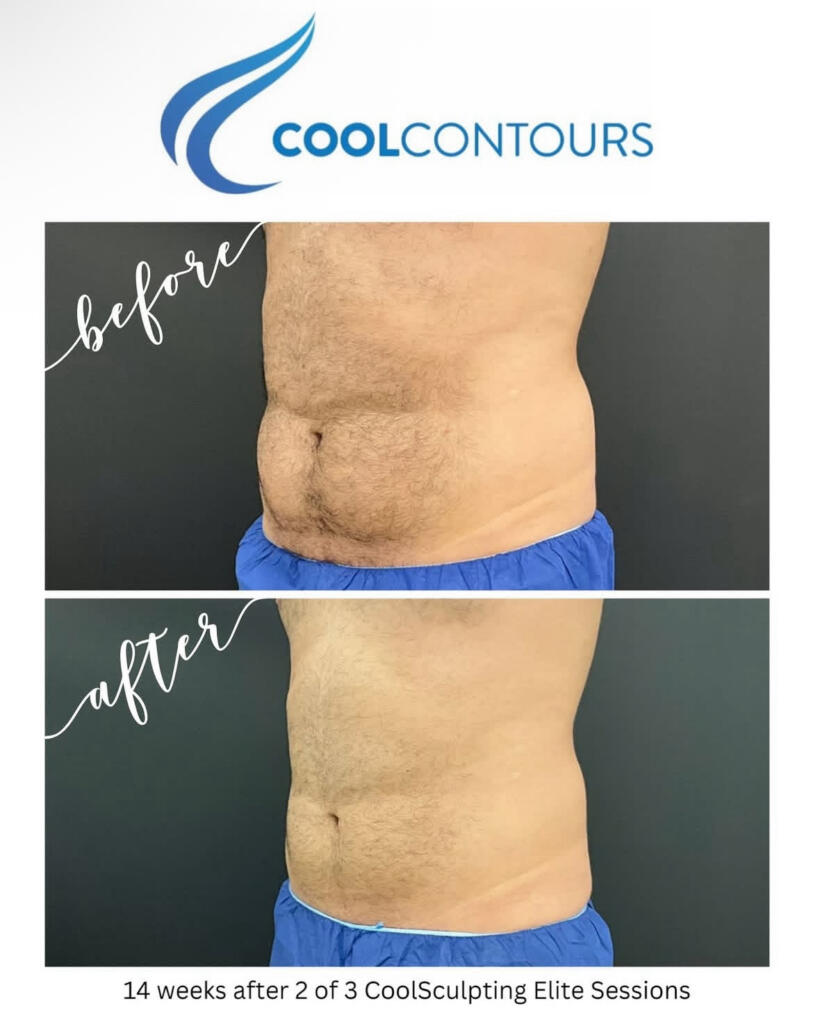
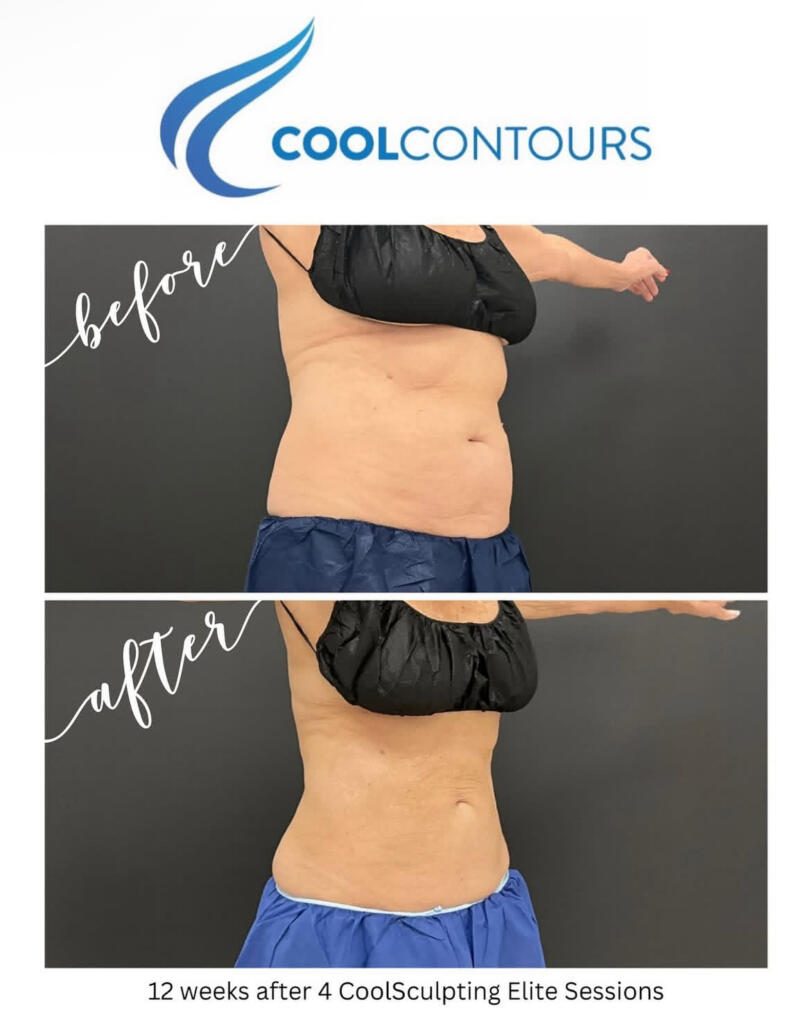
CoolSculpting is designed to improve body contour and reduce stubborn fat pockets, not serve as a weight loss treatment.
Looking for CoolSculpting in Northern Virginia?
Many people searching for weight loss solutions discover that the last few inches are often the hardest to change.
Even after successful dieting, exercise, or weight loss injections, stubborn fat pockets can remain.
CoolSculpting is designed specifically for those areas. Rather than helping patients lose weight, it helps refine and contour areas that may not respond to traditional weight loss efforts.
At Cool Contours, consultations include a personalized assessment to determine whether your goals are best addressed through weight loss, body contouring, or a combination of both.
Schedule a Consultation to meet with our team here.
Frequently Asked Questions
No. CoolSculpting is a body contouring treatment designed to reduce stubborn fat in targeted areas. It is not intended to create significant weight loss. That said, it can help inspire or encourage weight loss efforts. Additionally, it can work to reshape the body alongside weight loss with GLP1s or other efforts.
No. Weight loss and CoolSculpting serve different purposes. Weight loss reduces overall body weight, while CoolSculpting targets specific fat pockets.
Yes. Many patients choose CoolSculpting after reaching a stable weight to improve body contour and address stubborn areas that remain after weight loss. Read more about CoolSculpting After Weight Loss Injections here.
Yes. Treated fat cells are eliminated and do not regenerate. That said, CoolSculpting does not prevent weight gain. The remaining fat cells after your treatment can still change in size with natural weight gain.
Yes. Many patients use CoolSculpting after achieving weight loss goals with GLP-1 medications to further refine their results. Learn more about Weight Loss Injections vs. CoolSculpting here.
Not Sure Whether You Need Fat Freezing vs Weight Loss?
Every patient is different.
Some people benefit most from weight loss. Others are already at or near their goal weight and simply want to address stubborn areas that have not responded to their efforts.
A consultation can help determine the best path forward based on your goals, body type, and treatment areas.
